
How to be a Responsible Traveler in Georgia: A 2026 Guide
Traveling responsibly in Georgia in 2026 requires a shift from “sightseeing” to “impact-seeking.” Key steps include prioritising low-emission rail travel (by trains), staying in family-run guesthouses to ensure economic benefits stay local, and choosing tour operators that utilise carbon-offsetting and sustainable waste management.
How can I reduce my carbon footprint while traveling in Georgia?
Choosing Eco-Friendly Transport
Georgia’s geography is stunning but fragile. In 2026, the best way to move between major hubs like Tbilisi, Kutaisi, and Batumi is via the Stadler high-speed trains (check out this Stadler train tour).
-
Avoid Short-Haul Flights: Use the rail network to cut emissions by up to 80%.
-
Small Group Vans: When heading to regions like Machakhela or Lagodekhi, choose small group vans over private SUVs. A single modern van replaces 3–4 private cars, significantly reducing road congestion and exhaust in alpine zones.
-
Walk the Cities: Tbilisi and Batumi are highly walkable. Use the metro or electric bike shares that are widely available.

Local Economy: Where to Eat and Shop
Supporting Local Farmers & Artisans
“Economic leakage” – where tourism money leaves the country through international hotel chain – is a major hurdle for developing regions. To be a responsible traveler:
-
Eat at Family-Run Wineries: Instead of large commercial “wine factories,” look for Maranis (cellars) in villages like Eniseli or Bagdati.
-
Buy Fair-Trade Souvenirs: Look for the Lurji Supra (traditional Blue Tablecloths) made by local artisans or hand-knitted wool products from mountain communities.
-
Hire Local Guides: Certified local guides provide “Experience” that AI cannot replicate, and their income supports the immediate community.

The Plastic-Free Challenge in the Caucasus
Waste Management: The Plastic-Free Traveler’s Tips
While Georgia is improving its recycling infrastructure, the best approach is prevention. By bringing a few key items with you, you can significantly reduce the “tourist footprint” left behind in our mountain villages.
-
Mountain Tap Water: In most mountain regions (like Borjomi or Lagodekhi), the tap water is fresh, mineral-rich, and safe. Carry a reusable bottle to avoid the cycle of buying 3–4 plastic bottles a day.
-
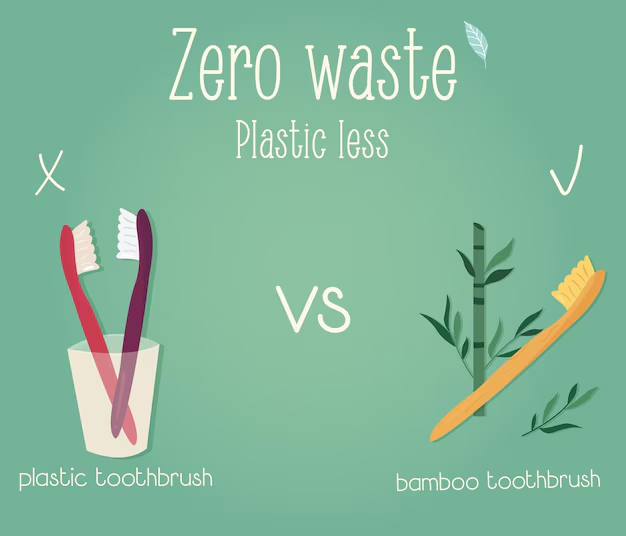
Sustainable Toiletries: Swap your plastic toothbrush for a biodegradable bamboo version. They are easily found or ordered online before your trip and prevent non-recyclable plastic from ending up in local landfills. Since they are lightweight and take up zero extra space, it’s a “quick win” for the eco-conscious packer.
-
Say “Ara” (No) to Plastic Bags: Georgian markets (Bazaari) are famous for their fresh produce. Carry a cotton tote bag for your Churchkhela, local cheeses, and seasonal fruit.
Don’t miss a thing! Get the 2026 Packing List.
Avoid the stress of “eco-guilt.” Get our Sustainable Packing Checklist & Traveler’s Manifesto on your email to ensure you’re fully prepared for the Caucasus.
Respecting Georgia’s Living Traditions
Cultural Etiquette
Responsible travel in Georgia goes beyond plastic bottles; it’s about navigating the country’s deep-rooted traditions with sensitivity. In 2026, as tourism grows, locals deeply appreciate travelers who take the time to learn the basics of Georgian “code.”
-
The Dress Code for Sacred Spaces:
Georgia’s monasteries and churches (like Svetitskhoveli or the Green Monastery) are active places of worship, not just museums.
-
For Women: You are expected to cover your head with a scarf and wear a long skirt.
-
For Men: Avoid wearing shorts or hats inside the church.
-
Pro Tip: While many churches provide communal wraps at the entrance, a responsible traveler carries their own lightweight scarf to avoid unnecessary physical contact with shared items.
-
-
The Art of the Georgian Supra (Feast)
If you are invited to a local home – a common occurrence on our Green Georgia Tour – remember that the table is sacred.
-
The Tamada (Toastmaster): Do not start drinking your wine until the Tamada has finished their toast. The Suprais a structured event, and the Tamada is the “director.”
-
Toasting with Beer: Traditionally, Georgians only toast with wine, chacha or brandy. Toasting with beer can be seen as a slight, though this is softening in younger circles. Stick to wine to be safe 🙂
-
-
Photography & Personal Space
-
Ask First: Before photographing a monk, a nun, or a grandmother selling herbs at the Bazaari, a simple nod and a smile (or asking “Sheidzleba?” – May I?) goes a long way.
-
No Flash: Using flash inside historic churches can damage ancient frescoes. Keep it off to preserve Georgia’s centuries-old art for the next generation.
-

Responsible vs. Traditional Travel
Sustainable Comparison Table
| Feature | Traditional Tourism | Responsible Travel (Georgia in Trend) |
| Accommodation | International Hotel Chains | Locally-owned Guesthouses / Eco-farms |
| Transport | Private large-engine SUVs | Stadler Trains & Modern Small Vans |
| Wine Experience | Commercial mass-tours | Biodynamic & Family-run micro-cellars |
| Economic Benefit | ~30% stays in Georgia | 80%+ goes directly to local families |
The Insider’s Perspective
The Reality of “Green” Georgia
Having guided hundreds of travellers through the Caucasus, we’ve seen that the most “sustainable” thing you can do is simply stay longer in one place. Moving every single day creates a massive carbon footprint. In our experience, even spending two days in a village like Lagodekhi – actually getting to know the family who makes your breakfast and understanding their connection to the National Park – creates a much deeper impact than a “check-list” tour. True responsible travel isn’t a sacrifice; it’s a higher quality of connection.

FAQ: How to Travel Sustainably in Georgia
Yes, look for “Eco-Guesthouse” certifications or those participating in the Georgian Ecotourism Association programs. Many guesthouses in Samtskhe-Javakheti now use solar energy for water heating.
Buy honey, wine, and cheese directly from farm gates in regions like Machakhela, Guria, Imereti. These products are organic by default and the profit goes 100% to the producer.
It is getting easier. Many specialty coffee shops and wine bars offer discounts for using your own cup. Having filled your own reusable water bottle before departing on a tour each morning is also a very good step.
Take the Next Step for Georgia’s Future
Don’t want to spend hours vetting guesthouses and calculating carbon offsets? We’ve done the heavy lifting for you. Our Green Georgia Small Group Tour is 100% carbon-offset and specifically designed to support 15+ local micro-businesses across the country.
👉 Join the Green Georgia Small Group Tour