
Beyond the Express: Why the Train to Ozurgeti is Georgia’s Best Kept Secret
It’s 4:00 PM on a Tuesday, and the air cooling through the open window of the train tastes different than it did in Tbilisi. It’s heavy with the scent of damp earth and wild citrus. As the tracks curve into the hills of Guria, you realize the “tourist wall” has finally dropped. You aren’t just looking at a map anymore; you’re sitting in the living room of Western Georgia, moving at a pace that allows you to actually see the faces of the people you’ve come to meet.
The Story of Guria: Dato and the Return of Georgian Tea
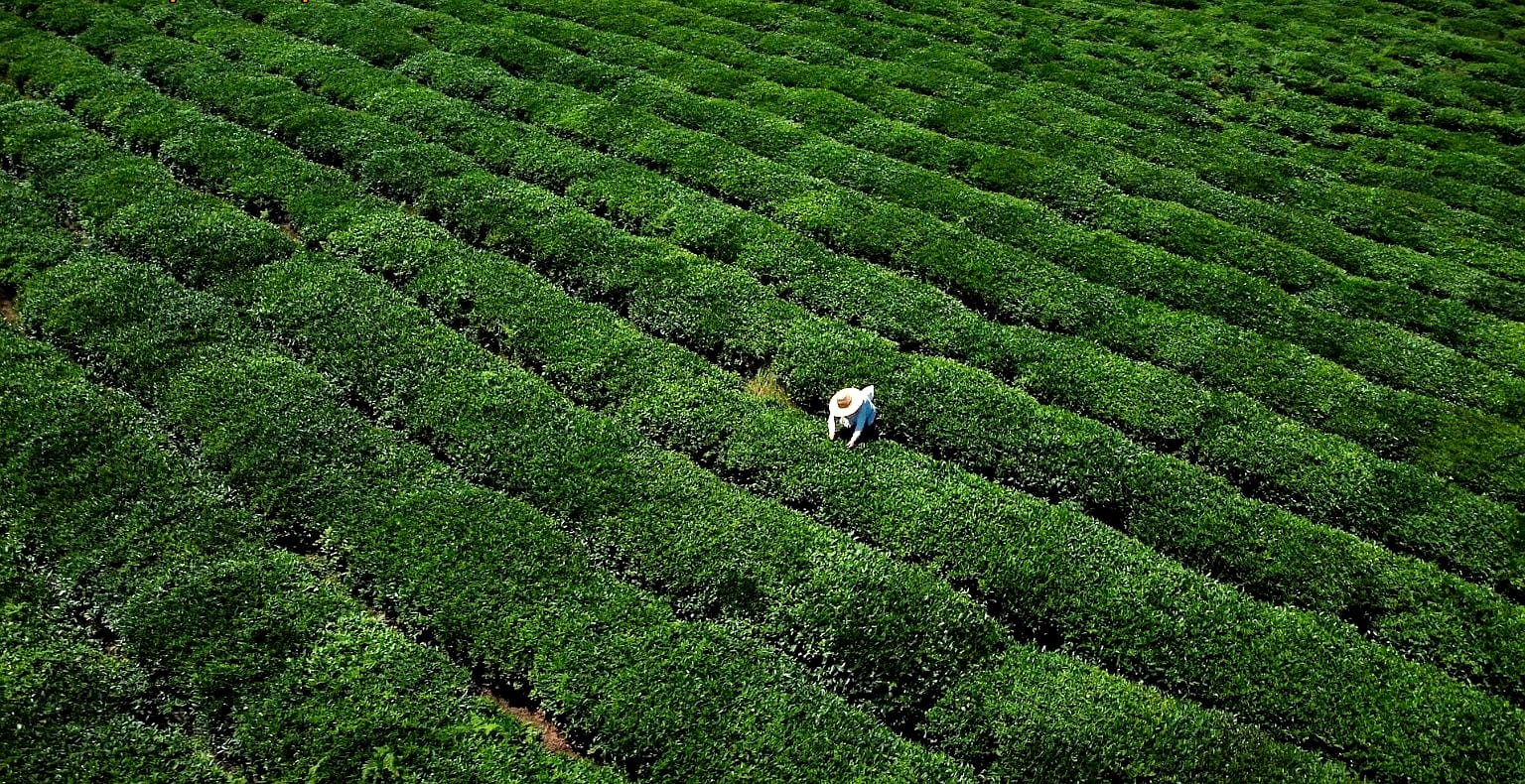
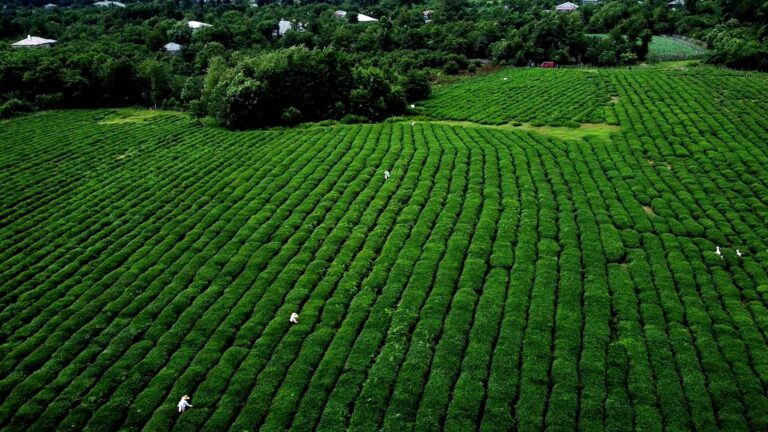
In western Georgia, where the hills of Guria meet the humid air from the Black Sea, tea has shaped the landscape for more than a century. Old plantations still cover the slopes around Ozurgeti, reminders of a time when Georgian tea was known far beyond the country’s borders. After the collapse of the Soviet Union, however, much of that industry disappeared. Factories closed, fields were abandoned, and many plantations slowly turned wild.
But not everywhere.
In the village of Bakhvi, near Ozurgeti, the Tenieshvili family kept working their tea fields when many others gave up. For Dato Tenieshvili, a third-generation tea farmer, leaving the plantations behind was never really an option. Tea had been part of the family’s life for decades.
The early 1990s were difficult years for tea growers. Equipment was unavailable, processing factories had stopped operating, and selling tea seemed almost impossible. Instead of giving up, Dato began rebuilding the family’s small tea production in the simplest way he could. Using wood and basic tools, he constructed a small tea-rolling machine powered by water from a nearby mountain stream. With that improvised device, the family produced their first handcrafted black tea in 1997.
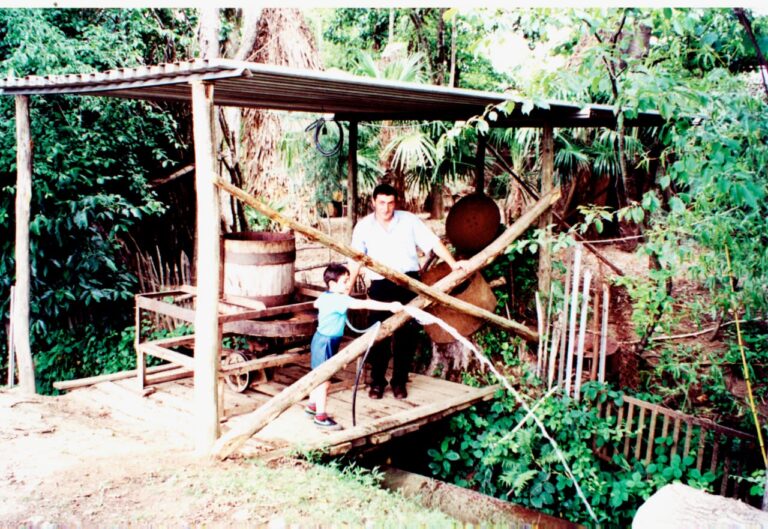
It was a modest start, but it allowed the tradition to continue.
Today the Tenieshvili family produces tea under the name Teni Tea, a small artisan project focused on quality rather than volume. The leaves are still harvested by hand, and the teas are made in small batches from traditional Colchian tea plants that grow naturally in Guria’s humid subtropical climate.
Alongside classic green and black teas, the farm also prepares distinctive local infusions, including fermented wild blueberry leaf tea collected in the nearby Bakhmaro mountains — a drink that has long been part of local herbal traditions.
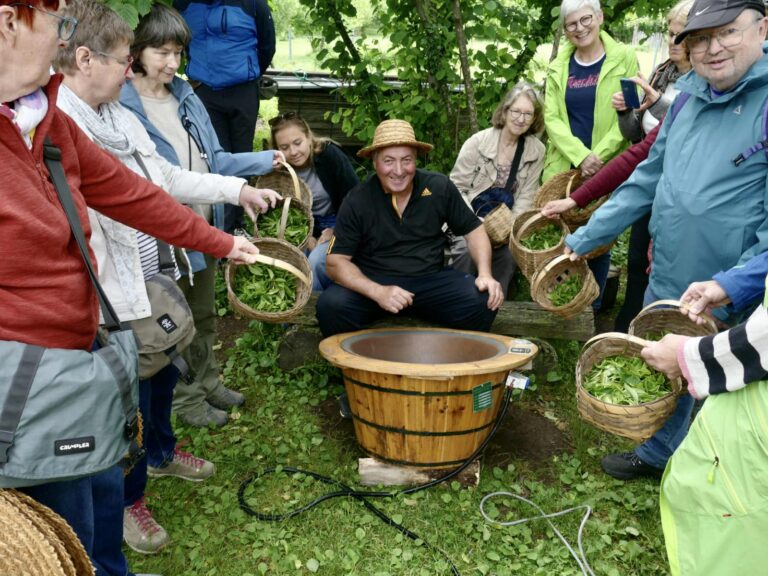
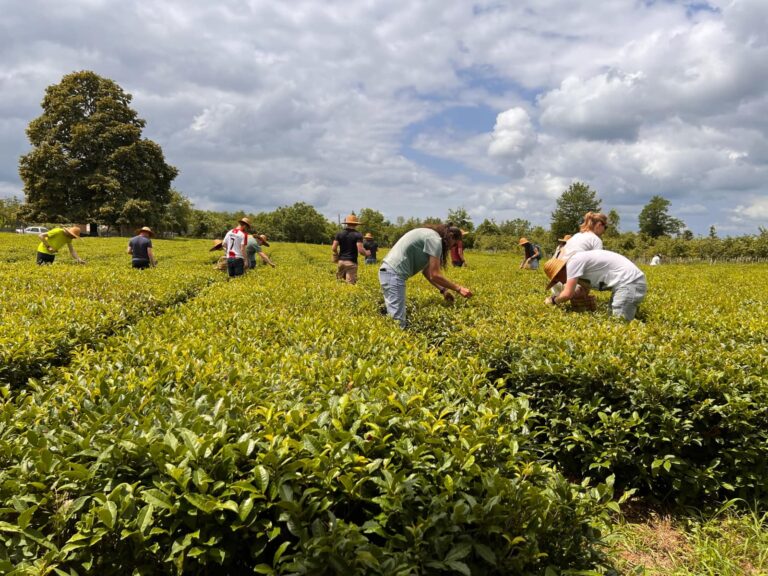
Visitors who come to the farm quickly realize that the experience is very different from industrial tea tourism. There are no large factories or automated harvesters here. Instead, guests walk through living tea fields, watch the harvesting process, and eventually sit down at the family table to drink tea grown just a few steps away.
Tea here is not presented as a product. It is part of everyday life.
Travel That Supports the Land
For Geotrend, working with farms like Teni Tea is about showing a different side of travel — one that connects visitors with local landscapes and communities.
The Tenieshvili family cultivates their tea without chemical pesticides, allowing the natural biodiversity of Guria’s subtropical ecosystem to thrive. The farm also provides seasonal work for local residents, many of them experienced women tea pickers who carefully harvest the young leaves by hand.
Just as importantly, the economic impact stays local. Visitors who come for tastings or tours support the family directly, helping maintain a small agricultural tradition that has survived difficult decades.
A Different Kind of Tea Experience
What many visitors remember most is not just the tea itself, but the atmosphere around it.
A walk through the green tea hills, the smell of fresh leaves in the humid air, and a quiet moment at the family table with a cup of tea creates a simple but memorable experience. Within minutes, the journey from plant to cup becomes clear.
For travelers, it is a rare chance to see a tradition that continues not because it is profitable or fashionable, but because families like the Tenieshvili have chosen to keep it alive.
And in Guria, that choice has quietly helped bring Georgian tea back to life.
Why We Take the Slow Train
Here, at Geotrend, we’re practitioners. We’ve seen the “high-speed” version of Georgia, and while it’s efficient, it misses the soul of the country. We chose to include the Ozurgeti line and partners like Dato in our itineraries because they represent the “real” Georgia we want you to see. When we take the train here, we aren’t just moving between cities; we’re participating in a slower, more honest way of life. It’s not a “commodity” for us – it’s the foundation of how we run tours in Georgia.
Traveler’s FAQ: Visiting Guria and the West
Guria is located in Western Georgia, between the mountains and the Black Sea.
We use the regional rail line from Tbilisi to Ozurgeti. It’s slower than the Batumi express, and that’s exactly why we love it.
Lightweight clothes for the humidity and your reusable water bottle (the mountain springs here are incredible). See our Sustainable Packing List and Guide for more.
Experience This Story in Person
If you want to skip the highway and find the “hidden” side of the Caucasus, we’ve designed two ways for you to do it:
-
Georgia Train Tour – Classic Rail: This is our dedicated rail journey that stops in the heart of Guria, connecting you directly with Dato and the tea traditions of the west.
-
Green Georgia Small Group Tour: Our flagship regenerative journey. We spend time with local partners across the country, ensuring your visit has a 100% positive impact on the communities we visit.